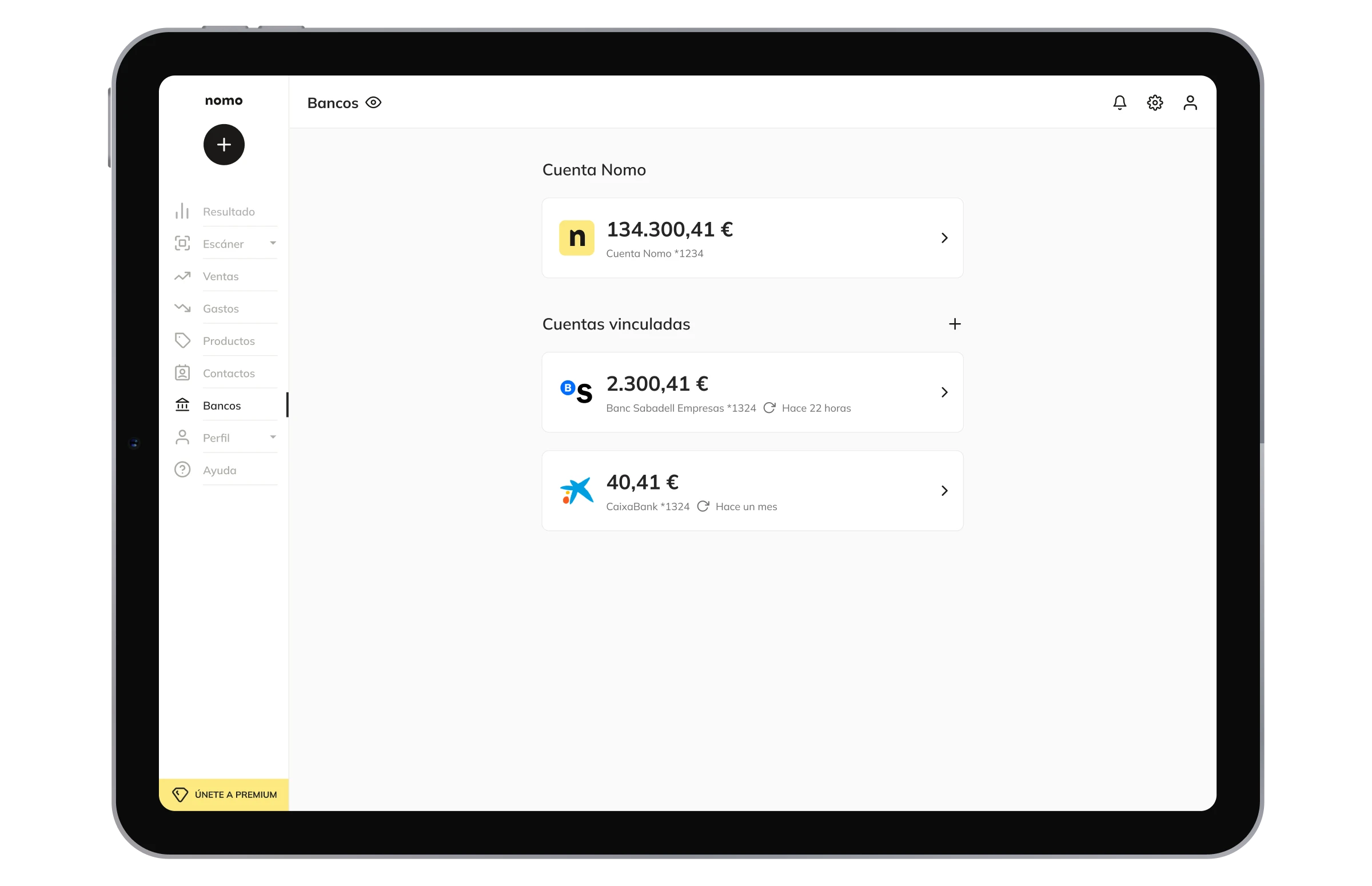
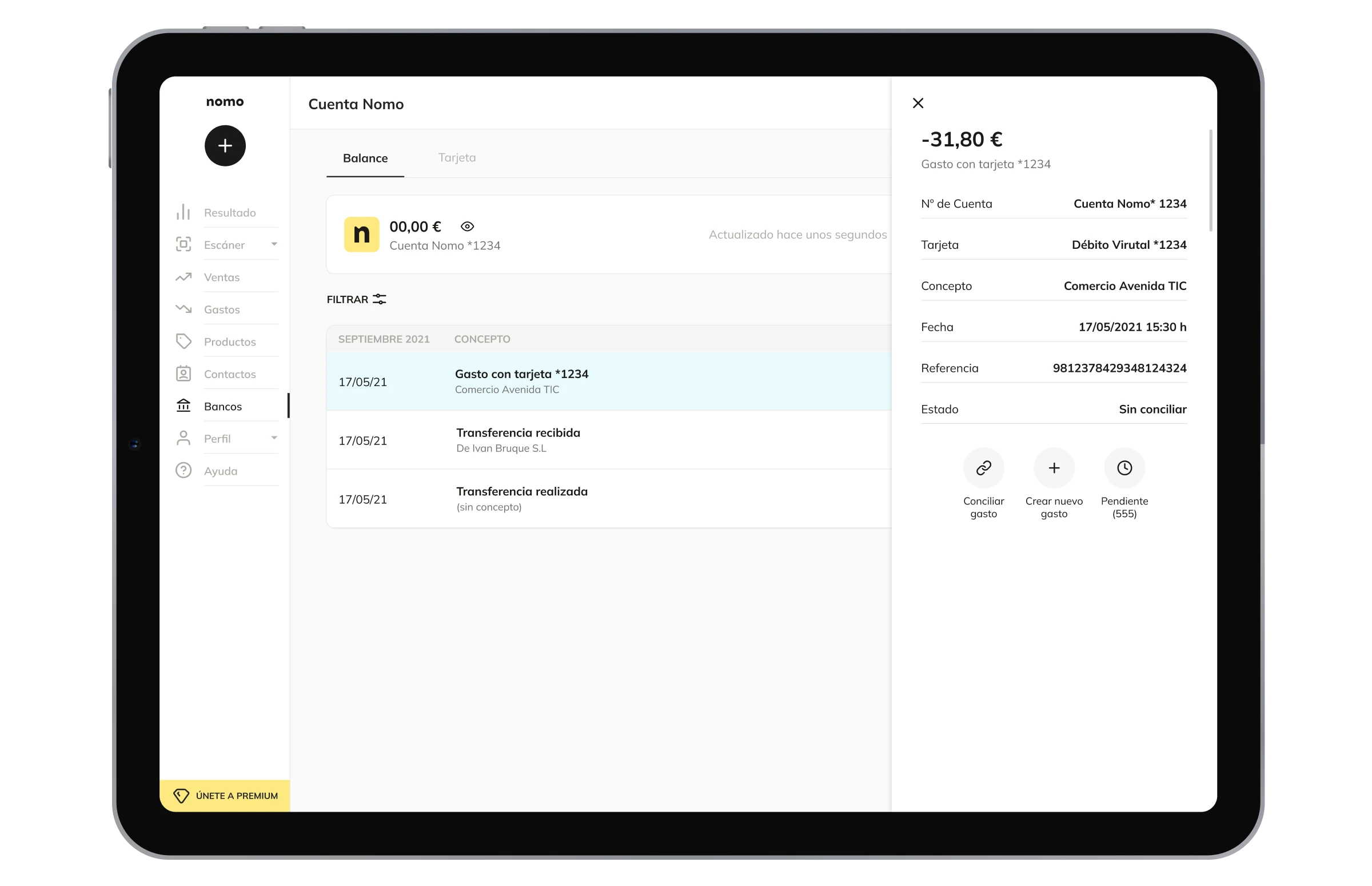
We didn’t ask them to switch banks. We offered them a smart complement.
A bank account as a new business line inside an invoicing SaaS.
- Context: Nomo, an invoicing app for freelancers and small businesses, launched its own bank account as a new business line.
- Finding: in 35 interviews, nobody would leave their bank. They wanted a complement that saved them time, and that became the product.
- Result: new pricing brought +22% MRR before launch, and 15% of active users paid for the account. It closed after an acquisition.
- Company
- Innocells, Banc Sabadell’s venture builder
- Role
- Senior Product Designer
- Years
- 2021-2023
- Scope
- Fintech, 0→1, GTM

At a glance
- +22% MRR after the plan redesign
- 15% of active users paid for the account
- 35 in-depth interviews
- 3 + 2 usage tiers + add-ons
Role and constraints
My role
Senior Product Designer in a product trio with product and engineering, working alongside compliance and the banking partner (e-money).
I owned
- Discovery research, end to end: plan, recruiting, interviews, synthesis and presentation.
- The end-to-end experience: sign-up, activation and daily use.
- User testing.
- Post-launch validation.
I influenced
- The positioning.
- The monetisation model.
Constraints
- Sector regulation: mandatory identity check (KYC/KYB) from sign-up.
- Mastercard has its own rules: the card had to pass its validation and follow its brand guidelines.
- Legacy: the new line had to fit into what already existed without affecting active users.
- Hard to test like a real user: every test of a bank account means going through a real identity check.
Problem space
01 Opportunity
A business bet and a product opportunity.
Nomo was an invoicing and expenses SaaS for freelancers and small businesses in Spain: invoices, expenses, a quarterly tax forecast and an accounting firm on demand.
Linked banks fed in transactions to match with invoices and expenses (reconciliation): read-only, and fairly manual.
The bet: a new business line with its own account (Spanish IBAN, Mastercard), built into the platform. An external bank would always be a guest; Nomo’s could do more.
| Integrations Limit From another bank | Nomo account Full Built into the app | |
|---|---|---|
| Imports transactions | Yes | Yes |
| Reconciles automatically | No | Yes |
| Sets aside the VAT and income tax owed | No | Yes |
| Pays suppliers | No | Yes |
| Pays taxes by direct debit | No | Yes |
We believed freelancers and small businesses would switch their bank for the Nomo account, because having invoices, expenses and money in one place would save them time.
02 Research
Validate before building.
Active users with a bank already linked, who knew the pain of joining admin and finances. The goal: their relationship with their banking products.
- When
- June 2021
- Method
- 35 in-depth interviews, desk research and a benchmark of business accounts
- Who
- Freelancers and small-business partners, at different capital levels
- Output
- Affinity map, empathy maps per segment, personas and journeys
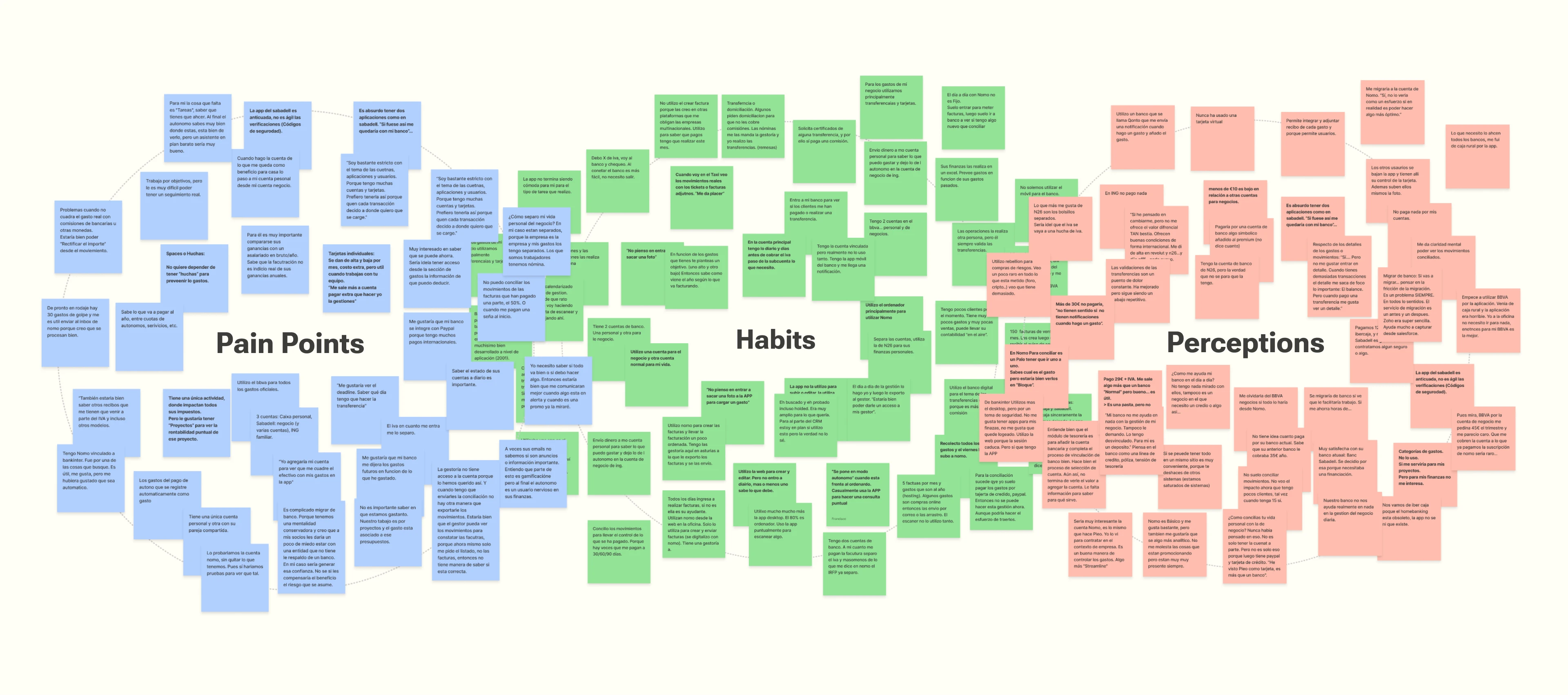
What we found
01 Their bank doesn’t help, and they don’t expect it to.
Asked how their bank helped them run the business:
Asked how it could help: silence. For them, a bank is a safe, and they’re fine with that.
“Honestly, with nothing.”
02 Nobody was going to leave their bank.
They liked the idea, but as something to add, not a replacement.
“We’d try the Nomo account, without dropping what we have.”
03 Freelancers and small businesses decide differently.
04 Paying for “a bank account” felt strange. Paying for its potential didn’t.
When the value was clear, price stopped being the issue.
“Being charged for the account on top of the Nomo subscription would be weird.”
05 What they really wanted was peace of mind.
“I just want someone to tell me everything’s fine with my business.”
The hypothesis was only half right:
- They wouldn’t replace their lifelong account. Their usual bank stayed.
- But a more proactive account did appeal to them: one that saved them time, flagged what was pending and told them everything was fine.
New north star
An online bank for freelancers and SMEs
Save time with a smart complement to your bank
I presented the results first to the C-level, then to the whole company, around 50 people. That shared language, “a complement, not a replacement”, shaped every decision that followed:
Solution space
03 Business model
If the account was a complement, it couldn’t be priced like a core product.
| First idea The account as a plan | What we chose Modular pricing | |
|---|---|---|
| Plans | Two bundles, with or without an accounting firm | Three tiers, by usage and business complexity |
| Who pays for the account | Everyone, for “another bank account” | Only those who see its value |
| Activation cost | An identity check per user, used or not | Only for those who pay |
| Accounting firm | Bundled into the premium plan | An add-on |


- Decision
- A modular model: three usage tiers, with the accounting firm and the bank account as add-ons.
- Trade-off
- Fewer users would try the account than in a bundle. We chose fewer people who really wanted it.
+22% MRR from week 8 on, vs. the week before the notice
+22% MRR, 9% churn. Most who left were on the cheapest plan: the dip was smaller than the churn.
MRR, change
MRR week by week over 12 weeks, as a change against week 3, the week before the notice. Customers were notified in week 4, and with the cancellations MRR fell 7% by week 6. The new plans were billed from week 6 and by week 8 MRR was 22% higher, where it held until week 12.
| Week | MRR change |
|---|---|
| 1 | -1% |
| 2 | -1% |
| 3 | 0% |
| 4 Customers notified | 0% |
| 5 | -4% |
| 6 New plans billed | -7% |
| 7 | +10% |
| 8 | +22% |
| 9 | +22% |
| 10 | +23% |
| 11 | +22% |
| 12 | +22% |
Plan mix
Before
After
- 70% Standard
- 30% Premium, with accounting firm
- 85% Basic
- 10% Essential
- 5% Advanced
- 9% left
Plan mix before and after. Before: 70% Standard and 30% Premium, with the accounting firm included. After, among those who stayed: 85% Basic, 10% Essential and 5% Advanced. Most Standard customers moved to Basic, and so did most Premium ones, keeping the accounting firm as an add-on. 9% of customers left, most of them from Standard.
04 MVP
Key decisions to build the MVP
-
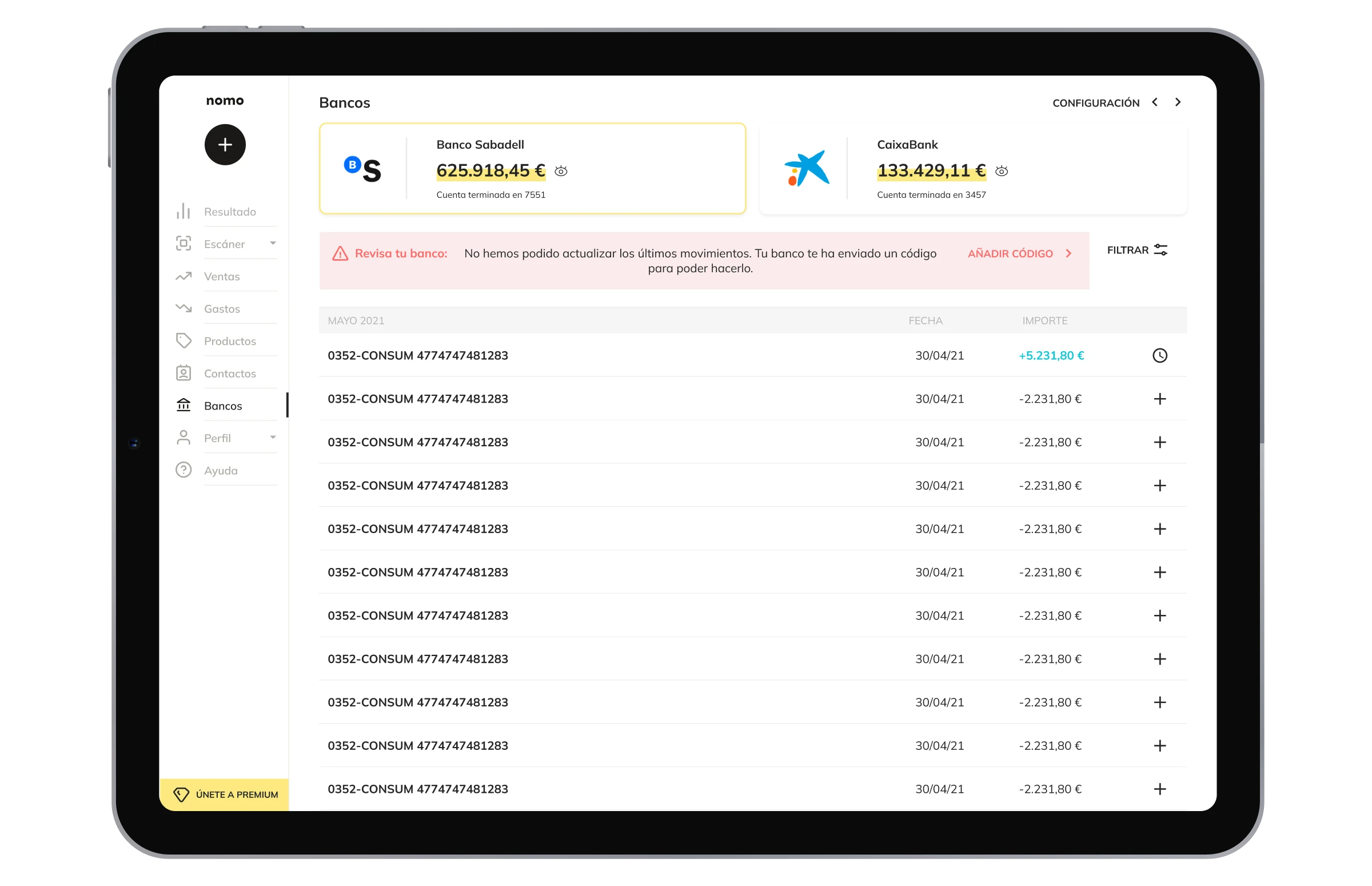
01 Your bank and ours, side by side
The banking section could have become a sales page. Instead, the Nomo account sits beside the banks users already trust, its advantages in view: keep your bank, and let Nomo make it work harder.
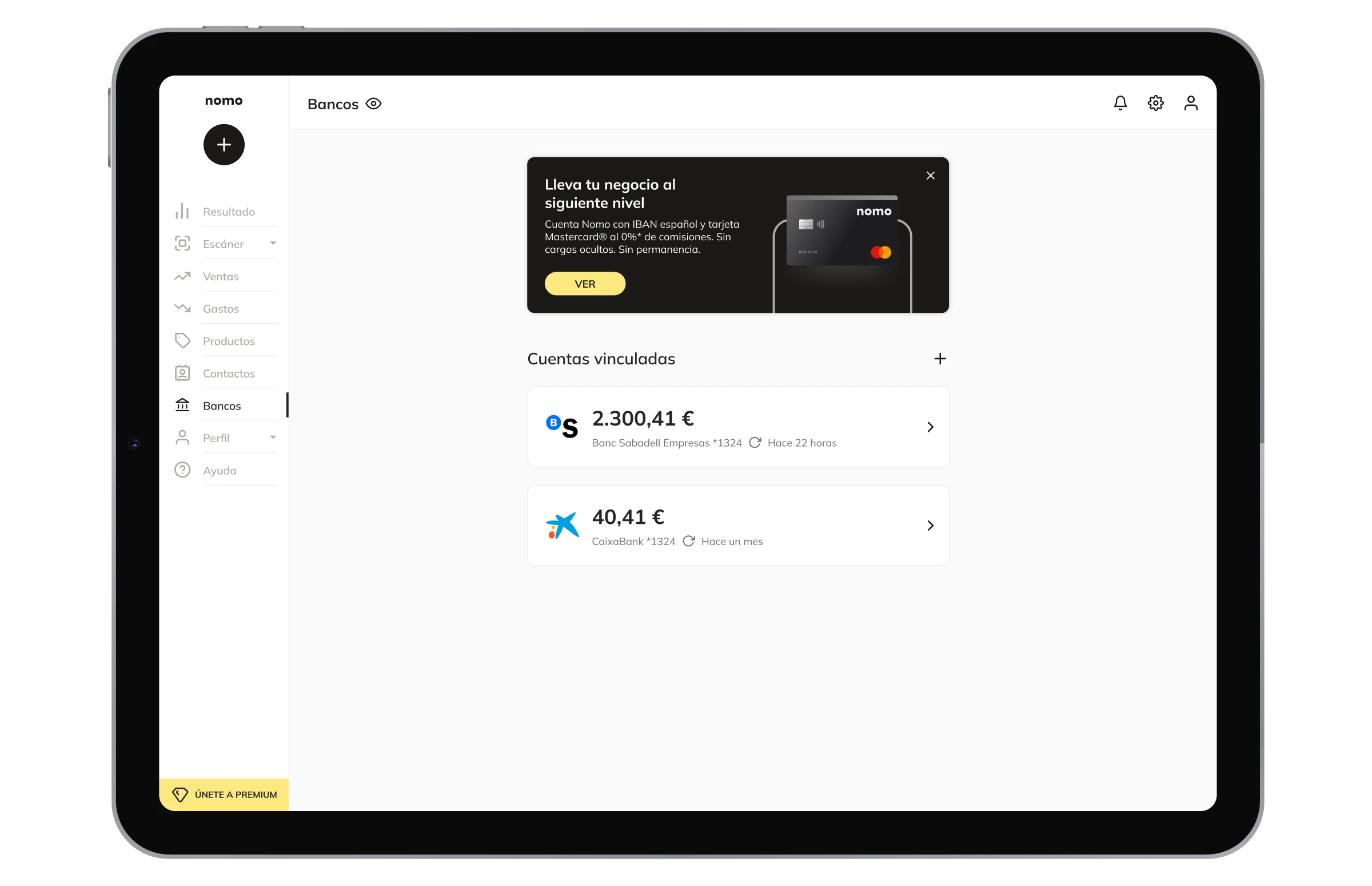
 Before
After
-
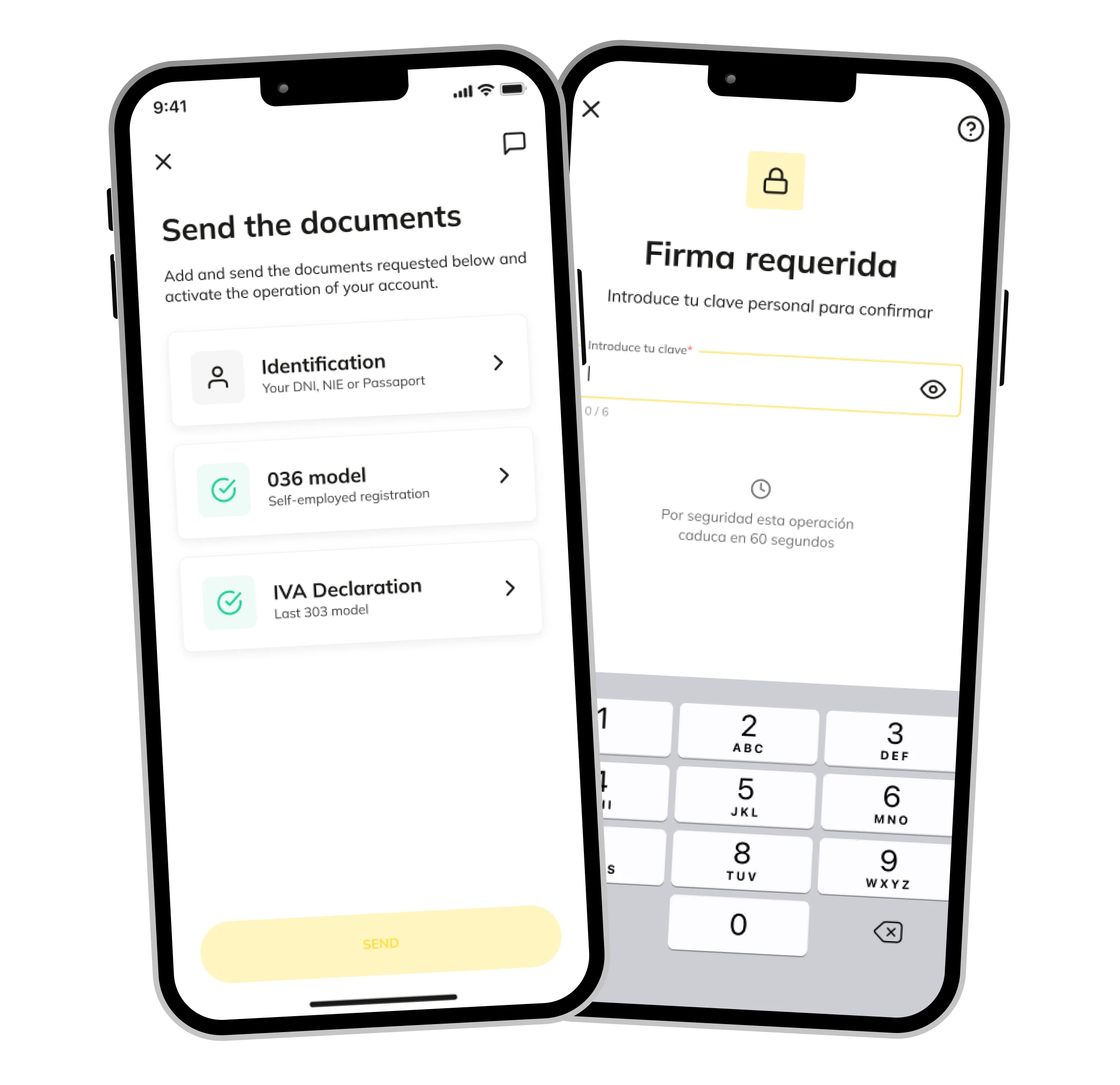
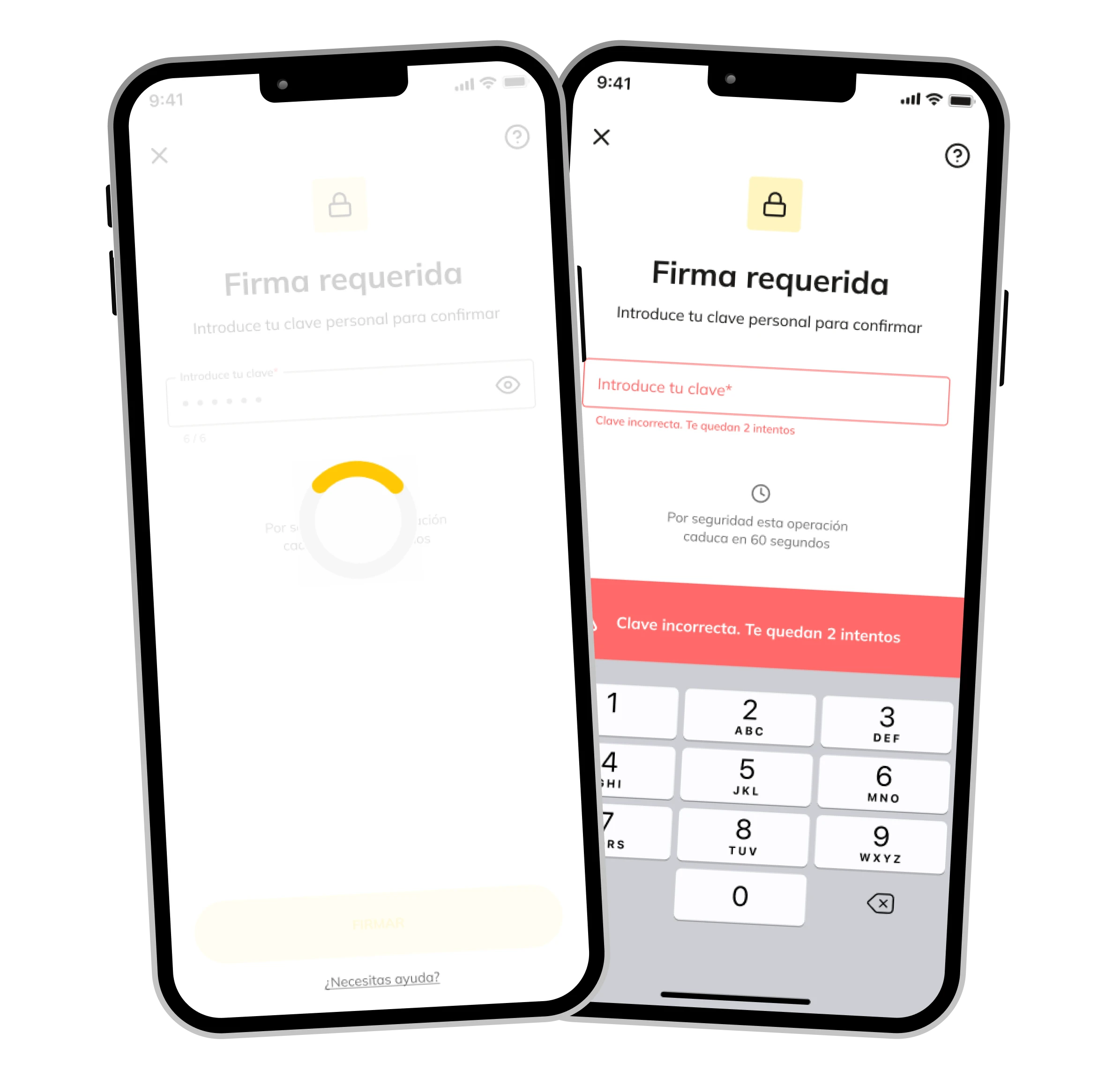
02 Activation designed around failure
The identity check depends on third parties, so we mapped every state before any screen: pending, approved, rejected, and how to recover. It starts on the web and ends on the phone, where photographing your ID takes seconds.
Trade-off: switching devices adds a step, but it removed the hardest part of the flow, uploading documents from a computer.
-
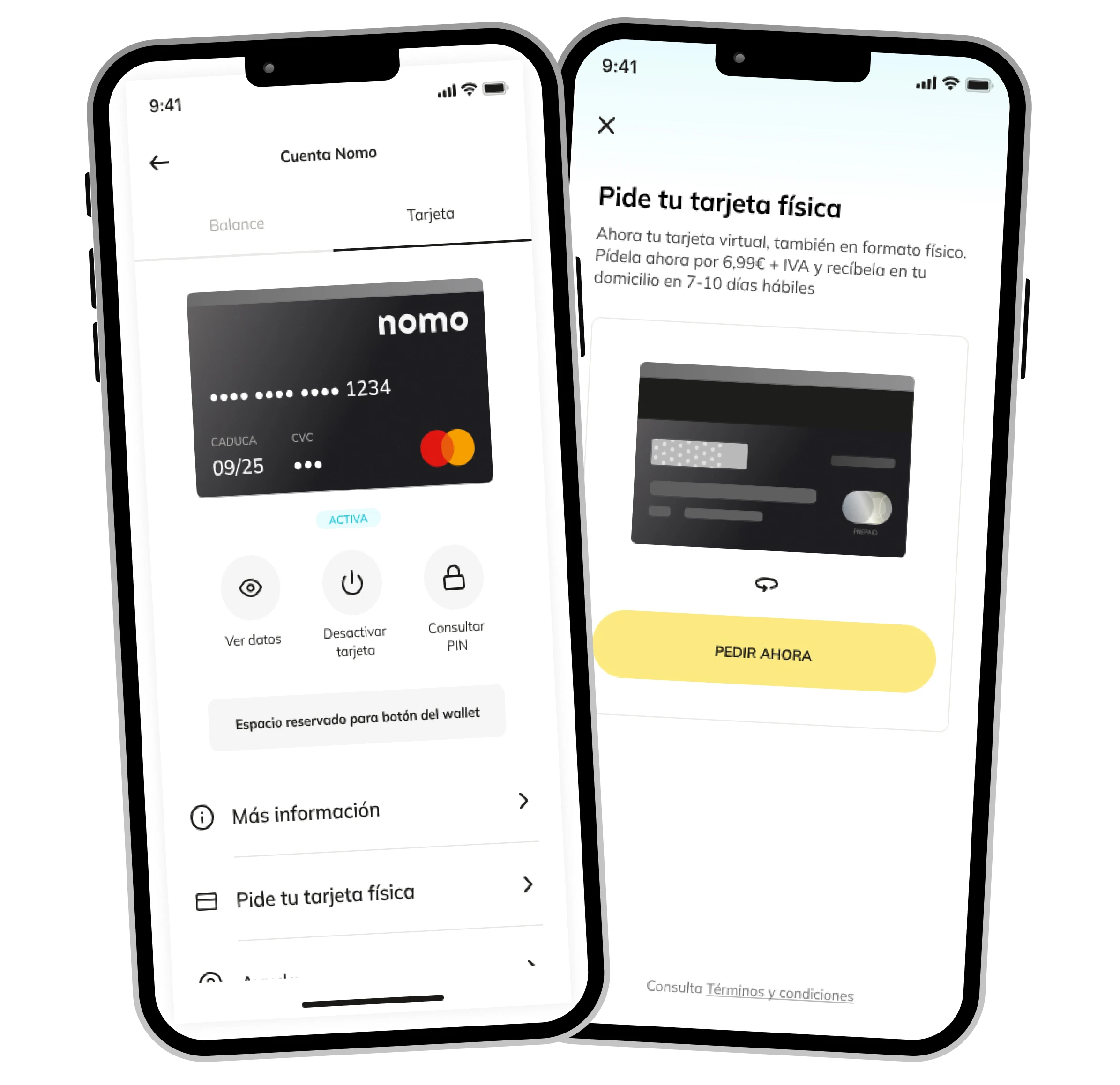
03 The card as the product
“Bank account” is abstract; a card in your hand isn’t. Black, after a benchmark of business cards, to read as serious, and validated against Mastercard’s brand rules.
-
04 Daily banking, next to the invoices
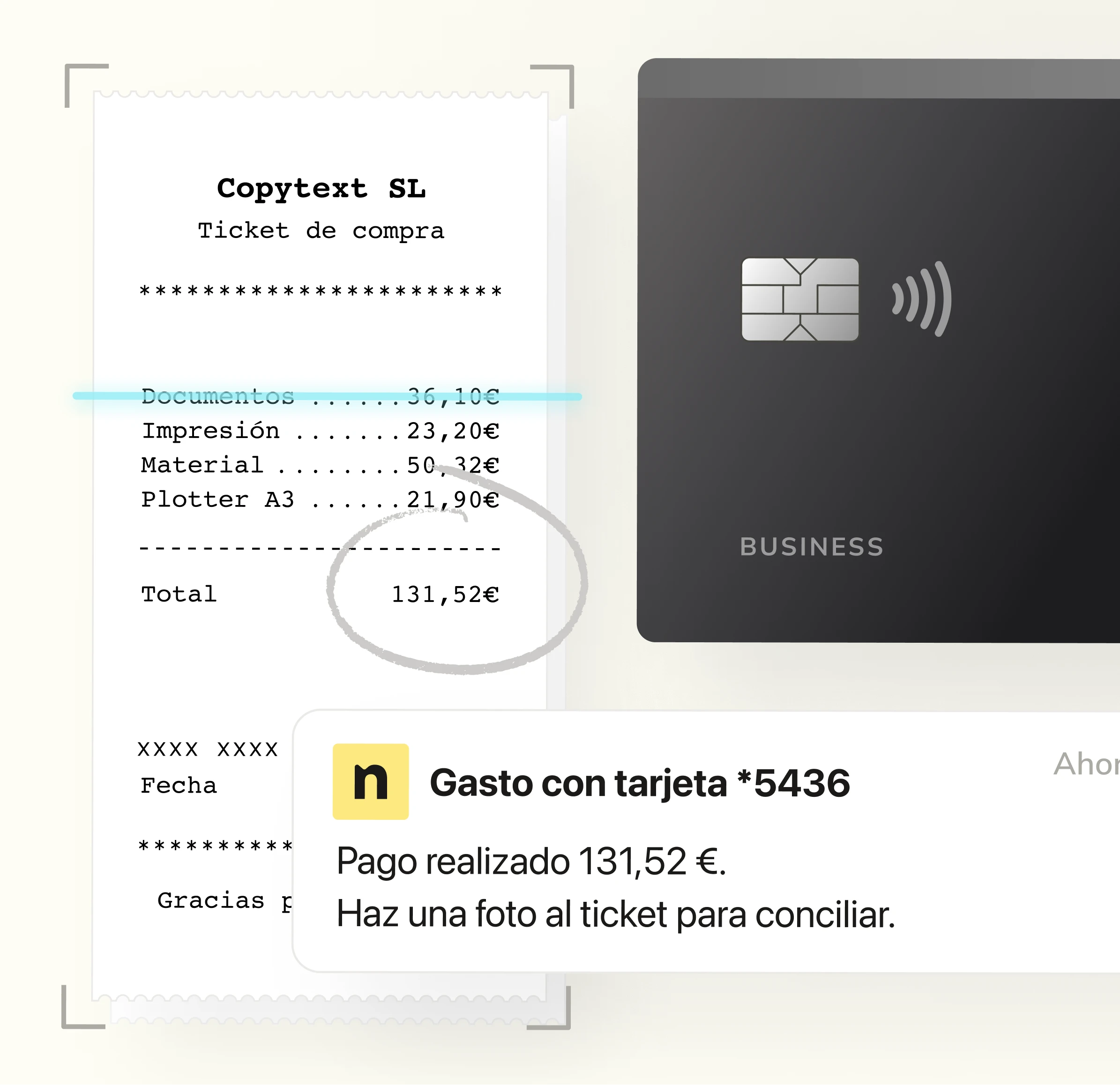
Balance, cards and transfers next to invoices and expenses. See the card’s details, switch it off, check the PIN or order it; every payment lands ready to match its expense.
05 GTM
Launch strategy
A bank account can’t just be switched off: users’ money is already inside. So it opened stage by stage, each only once the last one worked.
-
The research validated the proposition.
-
The new pricing went live and proved the business model.
-
Private beta, behind a feature flag.
-
Launch to our most loyal customers, with a coupon for two free months.
-
Public promotion of the add-on.
06 Metrics
AARRR funnel
Overall · 7%
Awareness · Progressive rollout Beta, loyal customers, then public.
- 100% 1 Acquisition
- 70% Overall 30% drop-off 2 Kept paying
- 32% Overall 55% drop-off 3 Activation
- 7% Overall 78% drop-off 4 Retention
- 1
15% of active users paid for the account
- 2
70% of them kept paying after 3 months. Those who stopped had never completed the identity check.
- 3
45% of activated accounts made a first deposit or transfer
- 4
10% paid business expenses with the card on a recurring basis
Listening to what’s behind the numbers
Q1 2022: a research plan to understand the funnel.
-
- Acquisition
- Activation
- Retention
Moderated usability study (SUS)
10 freelancers (5 users, 5 non-users) in three phases: understanding the plans, activating and daily use.
-
- Activation
Survey of those who activated (NPS)
How easy each step had been, and whether the name “Cuenta Nomo” described the product well.
-
- Awareness
- Acquisition
Survey of those who didn’t activate
A single question: why? Each answer opened a different follow-up.
- “I hadn’t heard about it” Marketing
- “I don’t understand it” Communication
- “I’m not interested” Product
After that, the story ended: Nomo was acquired by a listed company; an e-money account no longer fit its legal structure, so the account was closed.
The platform then turned to accounting firms and advisors: a different user, with years of habits in other tools.
That chapter is coming soon.
07 Learnings
We shipped the bank before the reason to use it.
Our magic moment, pay with the card and the expense reconciles itself, never launched, and the funnel broke right there. I’d fight for it in version one: a new business line needs the smallest version of the value, not of the product.
- 45% First deposit
- Never shipped Automatic reconciliation
- 10% Daily habit